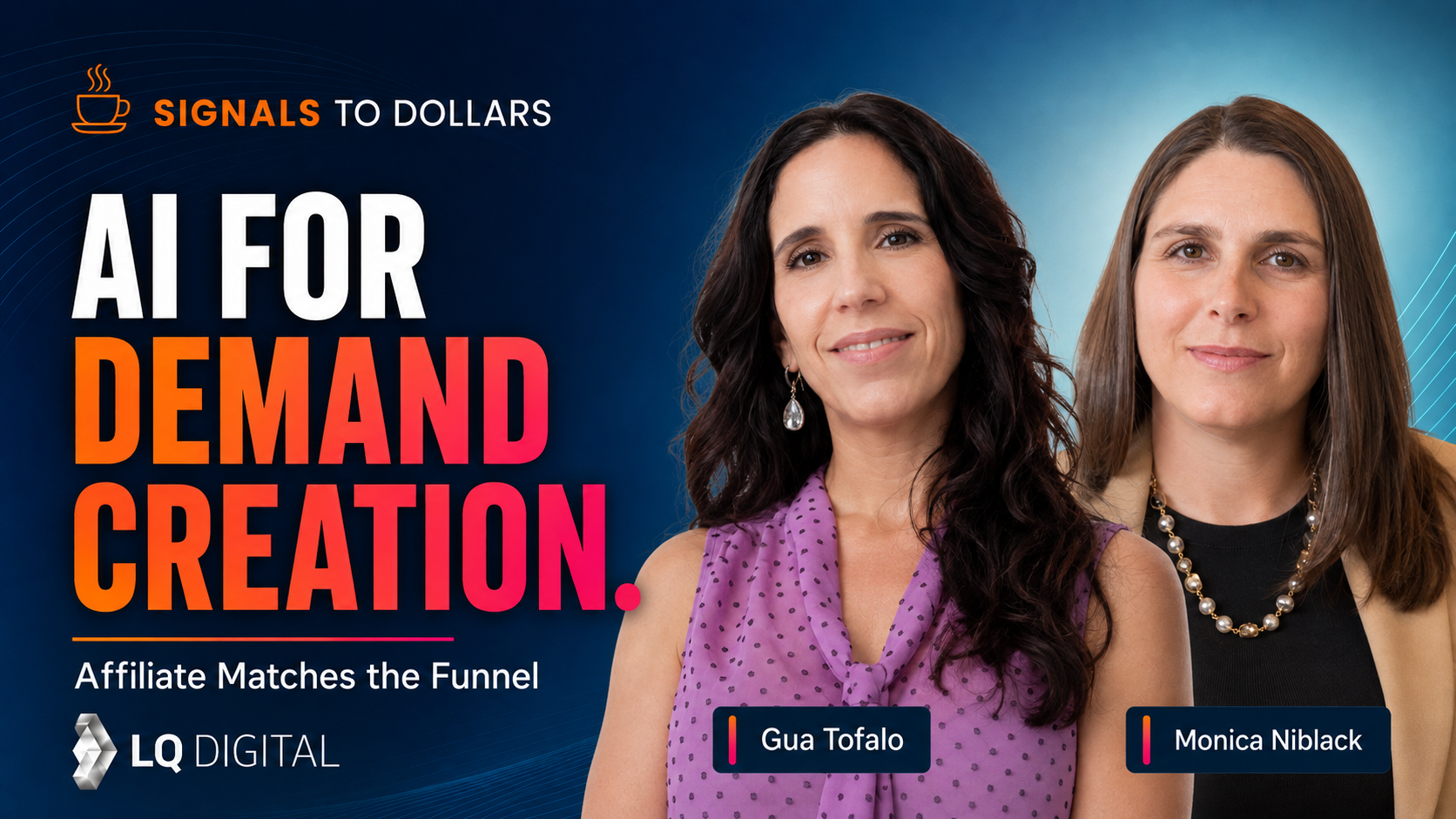
Signal to Dollars Coffee chat Series: Episode 1 with Monica Niblack and Lisa Ainza
The AEO conversation is moving fast. Some of it is genuinely useful. Some of it is noise. In the first episode of Signals to Dollars, Monica Niblack and Lisa Ainza try to work out which is which.
Monica and Lisa sat down to work through what is actually happening in organic search, what the data shows about AI adoption, and why the brands that stay grounded in marketing fundamentals are going to come out ahead, regardless of what the next algorithm shift looks like.
Here’s what came out of that conversation.
The noise is the problem, not the change
Every major shift in search has produced the same cycle: genuine change, followed by panic, followed by a wave of people monetizing the panic. AI is no different. What Lisa called “the snake oil SEO salesman” is back, this time carrying AEO talking points.
The tell is always the same:
- Urgency framing (“you’re already behind”)
- Vague promises with no mechanism explained
- Solutions that require you to abandon what’s currently working
If someone pitching you an AEO strategy can’t explain specifically why their recommendations work, that’s the answer.
What the data actually shows about AI search
The State of Search Report for Q1 2026 puts some numbers on a conversation that has been running mostly on speculation. AI tool usage in search is growing, but incrementally in the range of 0.2 to 0.3 percent. Search behavior is fragmenting across more surfaces, not shifting wholesale from one to another.
What that means practically:
- Google is not dying on the timeline the LinkedIn infographics suggest
- Traditional SEO fundamentals still drive the majority of organic traffic
- The job isn’t to replace your existing strategy, it’s to extend it across more surfaces
The brands that layer in AEO thoughtfully, on top of solid fundamentals, are going to be positioned well.
Speed without strategy is just more noise
AI compresses execution time. That’s real and it’s genuinely valuable. But when everyone is using the same tools pulling from the same training data, the output starts to converge. Monica shared a story from a colleague hiring for a senior role who received eight nearly identical AI-generated case studies from eight different candidates. Same structure, same language, same conclusion.
“When everyone can use AI, you risk getting lost in the noise even faster.”
The brands winning right now aren’t the ones producing content the fastest. They’re the ones with an original point of view that AI is helping them execute at scale, not generating for them.
The five-year shift every CMO should be planning for
Here is the structural change that matters more than any single algorithm update: the brand-to-consumer relationship now has a new intermediary.
When a prospective customer asks an AI system about your product category, your brand is being described (or not) by something you did not write and cannot directly control. The question for the next five years is not just “how do we rank?” It is “how do we make sure AI systems relay the right message about our brand when our audience asks?”
That changes the value of a few things most brands are underinvesting in:
- Information architecture. Is your website structured so that crawlers and AI systems can accurately understand what you do and who you serve?
- Third-party content presence. LQ Vision data shows that in personal finance, 40 percent of AI citations come from third-party content sites, not brand websites. Publishers, affiliates, and editorial content are AEO real estate.
- Content coverage. If you leave a gap, AI fills it. Monica and Lisa have seen it firsthand, prospects being told a brand has features it doesn’t have because the brand’s content never addressed that question.
The takeaway
Good marketing has always been about reaching the right person, with the right message, at the right moment. That has not changed. What has changed is the number of places where those moments happen, and the number of intermediaries between your message and your audience.
AEO is not a replacement for a strong marketing strategy. It is what happens when you extend a strong marketing strategy into the channels where your audience is now forming opinions about your brand before they ever visit your website.
That’s the signal worth following.
Read Google’s Optimizing for Generative AI document.
Subscribe to Signals to Dollars for a new episode every two weeks — no fluff, just signal.