More competition. Less clicks. Higher stakes.
The quality of your data and signals now determines the quality of your results.
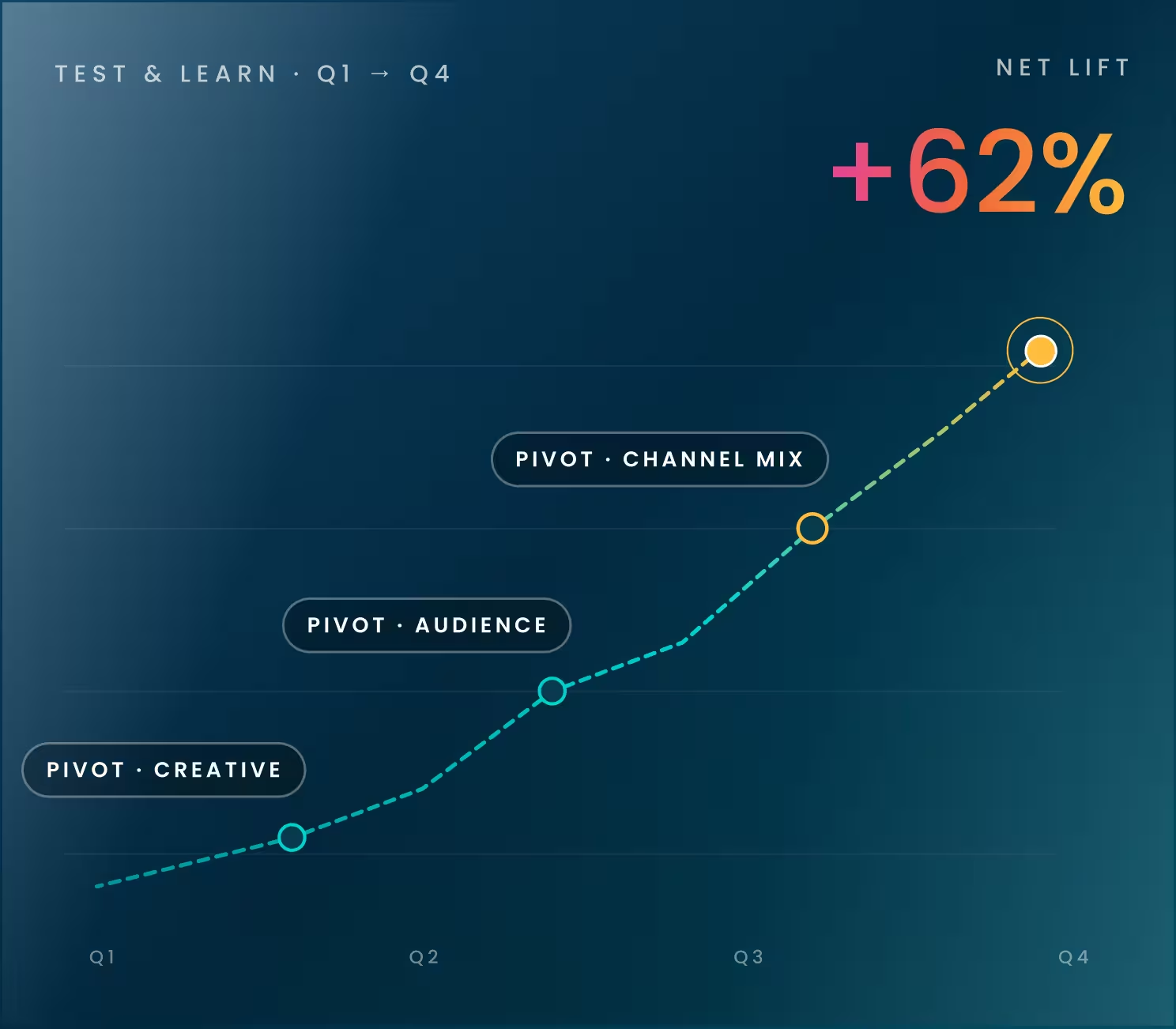
The right strategy makes every dollar work harder.
You are not buying keywords. You are acquiring customers.

Your edge is not the search engine. It is what you feed it.
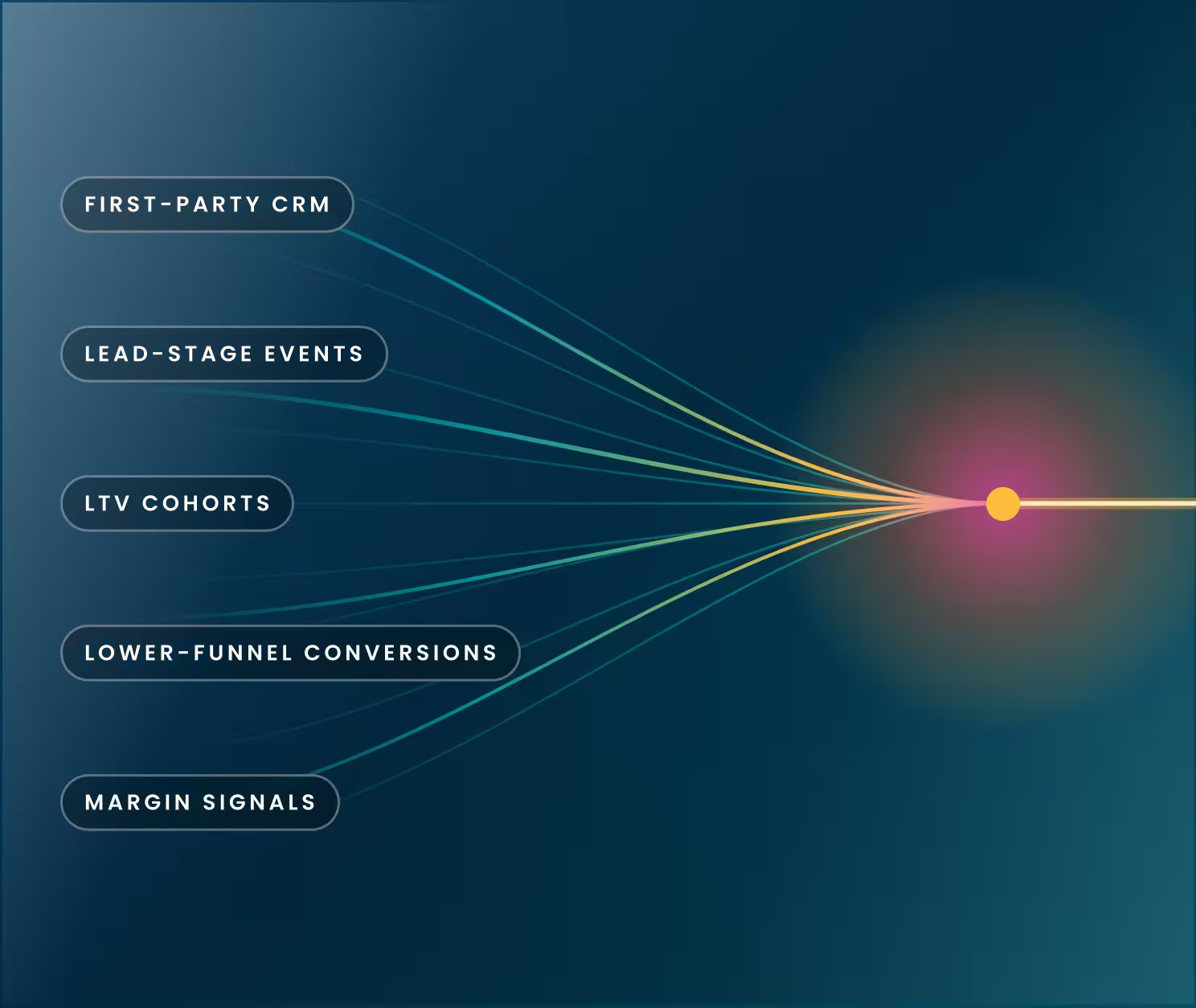
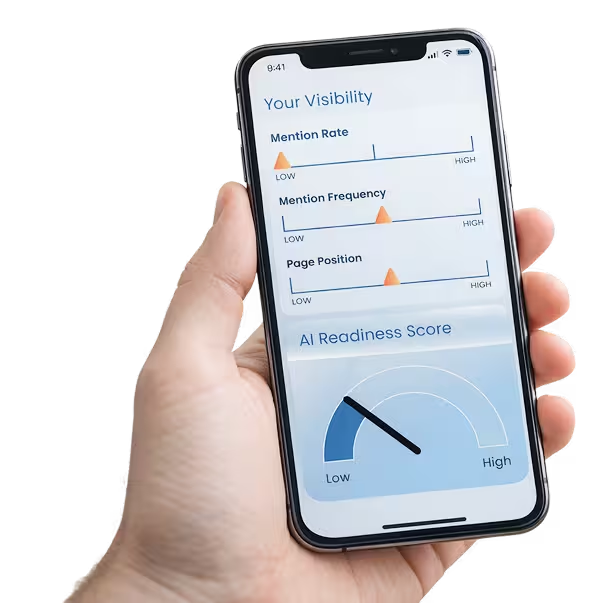
You can't control the black box. You can measure what comes out of it.
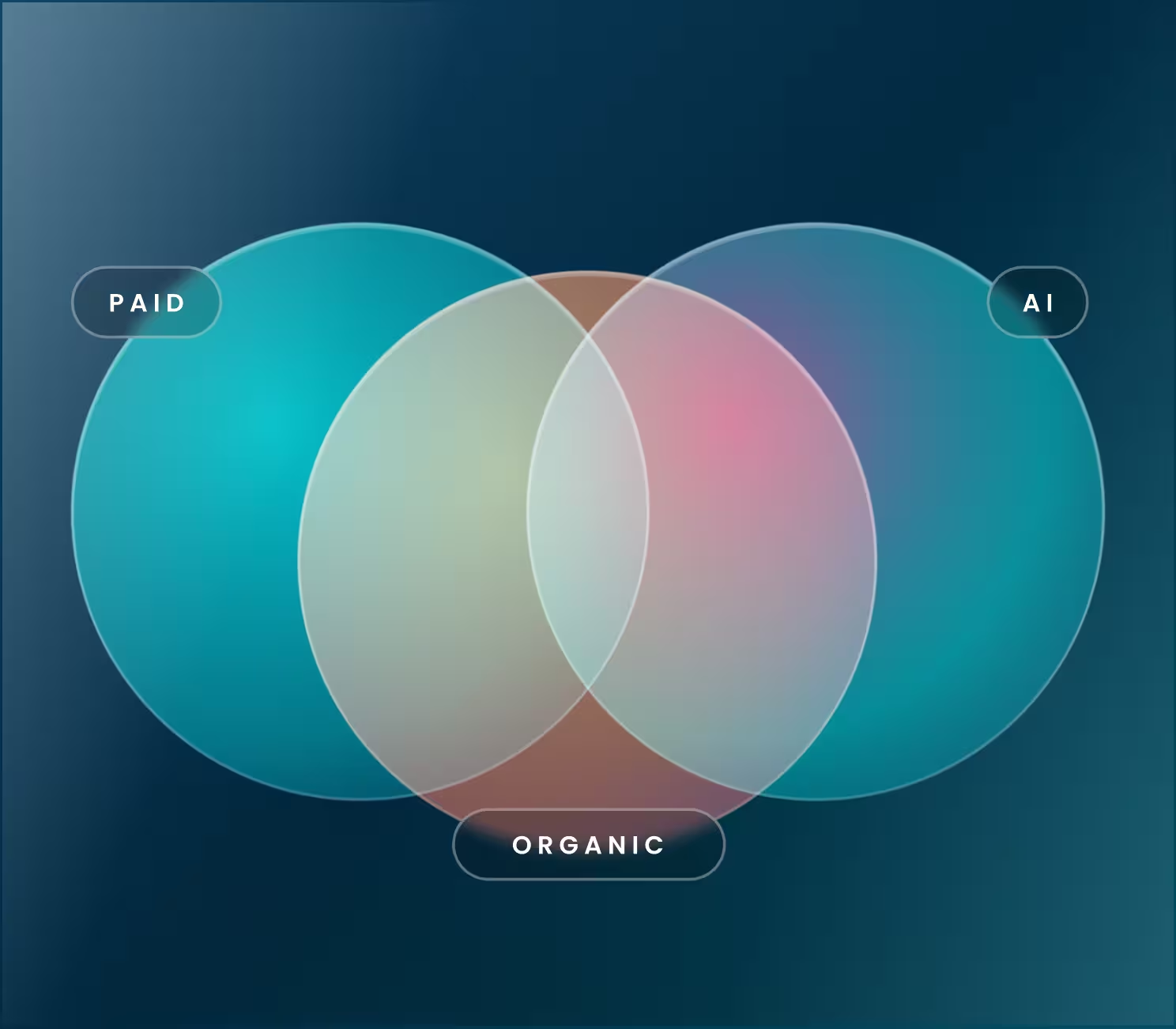
Your buyers are not just searching. They are discovering.



"We have found a trusted partner that is fluent in digital innovations and best practices and stewards our brand experience through change while maintaining a committed focus on building lasting business impact."

LQ Digital understands the two things we need in a performance marketing partner: how to build digital demand for a financial product and how to be laser focused on performance. That's why we have been working with them for years.”
Search is more expensive than ever.
Make sure every dollar is working on the right customer.
Growth Leaders Ask
Why is paid search getting more expensive?
Heading 1
Heading 2
Heading 3
Heading 4
Heading 5
Heading 6
Lorem ipsum dolor sit amet, consectetur adipiscing elit, sed do eiusmod tempor incididunt ut labore et dolore magna aliqua. Ut enim ad minim veniam, quis nostrud exercitation ullamco laboris nisi ut aliquip ex ea commodo consequat. Duis aute irure dolor in reprehenderit in voluptate velit esse cillum dolore eu fugiat nulla pariatur.
Block quote
Ordered list
- Item 1
- Item 2
- Item 3
Unordered list
- Item A
- Item B
- Item C
Bold text
Emphasis
Superscript
Subscript
Paid search costs have risen consistently due to increasing advertiser competition, platform automation that reduces manual control, and shrinking search real estate driven by mobile-first layouts and AI-generated answers. As more advertisers compete for fewer visible placements, cost-per-click inflation continues across most categories. Brands that manage costs most effectively tend to focus on signal quality and audience precision rather than simply increasing bids.
How does automation in paid search affect performance?
Heading 1
Heading 2
Heading 3
Heading 4
Heading 5
Heading 6
Lorem ipsum dolor sit amet, consectetur adipiscing elit, sed do eiusmod tempor incididunt ut labore et dolore magna aliqua. Ut enim ad minim veniam, quis nostrud exercitation ullamco laboris nisi ut aliquip ex ea commodo consequat. Duis aute irure dolor in reprehenderit in voluptate velit esse cillum dolore eu fugiat nulla pariatur.
Block quote
Ordered list
- Item 1
- Item 2
- Item 3
Unordered list
- Item A
- Item B
- Item C
Bold text
Emphasis
Superscript
Subscript
Platform automation has shifted more decisions away from advertisers and toward machine learning systems. While automation can improve efficiency at scale, it also reduces visibility into what is actually driving results. The quality of the inputs you provide, including audience signals, conversion data, and bidding objectives, now determines how well automation works for your business. Brands that feed platforms strong, business-aligned signals tend to outperform those relying on platform defaults.
What is the difference between optimizing for conversions and optimizing for business outcomes?
Heading 1
Heading 2
Heading 3
Heading 4
Heading 5
Heading 6
Lorem ipsum dolor sit amet, consectetur adipiscing elit, sed do eiusmod tempor incididunt ut labore et dolore magna aliqua. Ut enim ad minim veniam, quis nostrud exercitation ullamco laboris nisi ut aliquip ex ea commodo consequat. Duis aute irure dolor in reprehenderit in voluptate velit esse cillum dolore eu fugiat nulla pariatur.
Block quote
Ordered list
- Item 1
- Item 2
- Item 3
Unordered list
- Item A
- Item B
- Item C
Bold text
Emphasis
Superscript
Subscript
Conversion optimization focuses on maximizing the number of recorded actions such as form fills, purchases, or sign-ups. Business outcome optimization aligns search strategy to metrics that reflect actual business value, such as customer acquisition cost, lifetime value, and revenue contribution. A campaign can generate a high volume of conversions while still being inefficient if those conversions do not reflect the customers most valuable to the business.
How does first-party data improve paid search performance?
Heading 1
Heading 2
Heading 3
Heading 4
Heading 5
Heading 6
Lorem ipsum dolor sit amet, consectetur adipiscing elit, sed do eiusmod tempor incididunt ut labore et dolore magna aliqua. Ut enim ad minim veniam, quis nostrud exercitation ullamco laboris nisi ut aliquip ex ea commodo consequat. Duis aute irure dolor in reprehenderit in voluptate velit esse cillum dolore eu fugiat nulla pariatur.
Block quote
Ordered list
- Item 1
- Item 2
- Item 3
Unordered list
- Item A
- Item B
- Item C
Bold text
Emphasis
Superscript
Subscript
First-party data gives search platforms more accurate signals about which customers are most valuable to your business. When platforms understand the characteristics of your best customers, they can optimize bidding and targeting toward audiences more likely to match that profile. As third-party data becomes less available and platform automation increases, the brands with the strongest first-party data foundations have a structural advantage in paid search performance.
How is AI changing paid search visibility?
Heading 1
Heading 2
Heading 3
Heading 4
Heading 5
Heading 6
Lorem ipsum dolor sit amet, consectetur adipiscing elit, sed do eiusmod tempor incididunt ut labore et dolore magna aliqua. Ut enim ad minim veniam, quis nostrud exercitation ullamco laboris nisi ut aliquip ex ea commodo consequat. Duis aute irure dolor in reprehenderit in voluptate velit esse cillum dolore eu fugiat nulla pariatur.
Block quote
Ordered list
- Item 1
- Item 2
- Item 3
Unordered list
- Item A
- Item B
- Item C
Bold text
Emphasis
Superscript
Subscript
AI is reshaping search results pages in ways that reduce the number of traditional ad placements visible to users. AI-generated answers and overviews are occupying more of the screen, particularly on informational queries, which pushes paid results further down or out of view entirely. At the same time, AI is influencing which brands and sources appear in those generated answers. Brands that understand both paid and AI visibility are better positioned to maintain presence across the full search experience.
.avif)